
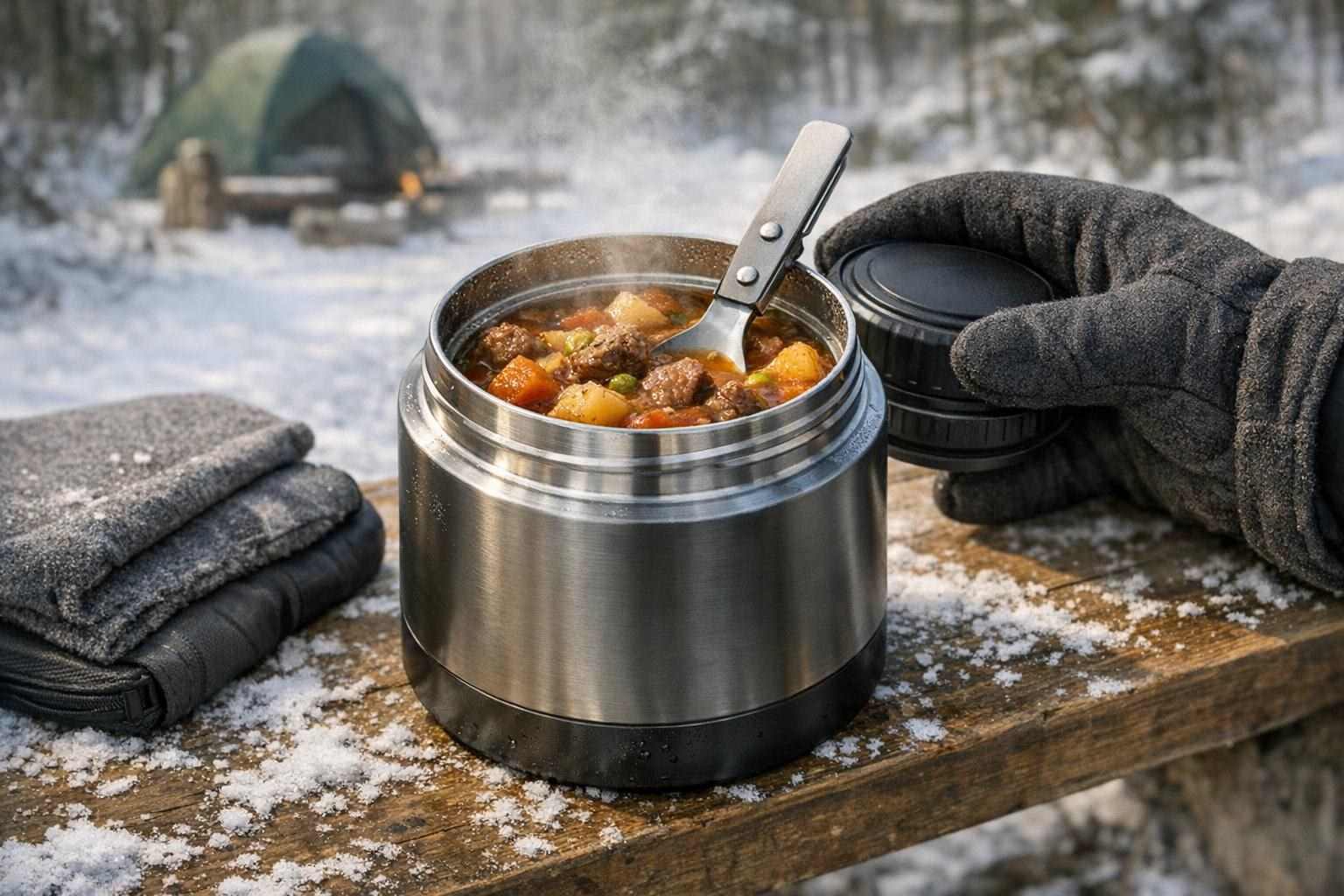
Cold weather can be more problematic than most people realize for reasons unrelated to hunger. The simple act of eating or drinking can become troublesome when cold fingers struggle with sticky closures. With a little forethought, time and effort can be saved, and a nice warm stop taken, to recharge, when required. All sorts of food can be used, but some are better than others for specific activities, for certain circumstances, and for particular times of the year. Just remember to choose items that will not freeze solid, get wet, or become soggy and unmentionable in cold weather, and be aware of the packaging.
Start with the breaks your route will allow
When planning meals for your outdoor adventures, first plan for the breaks you will have along the way. A slow strolling through the woods to and from your hunting spot is very different from a long approach to your destination. Food should be easy to consume while glassing, tracking or moving slowly through the brush. Calorie rich foods can be broken up into small portions and then eaten at various times throughout the day.
Don't confuse 'length of time out' with 'number of eating opportunities'. A short woodland walk might have several opportunities for short breaks where you can have a main meal. But a long approach over exposed terrain where you'll be moving quickly and wearing yourpack may mean that you only have time for several small bites of food of varying types throughout the day.
Try to keep one food item outside of your main food bag for immediate consumption. This can be something like a piece of dried fruit or energy bar. Avoid items that will freeze solid and make a mess of your pockets. Also try to pack items in their wrappers to keep a clean site.
Make the Thermos do one job well
Thermoses are best used for items that will be consumed in relation to the length of your day out. A thick soup, stew, hot oatmeal or rice dish are excellent items to take on long cold weather days as they will provide more sustaining energy than simple drink. However, they need a wide opening and a spoon to eat from. Ideal for these types of meals are a Thermos with a wide mouth and a good, sturdy spoon.
Hot water can be used to preheat a container before filling it with hot food. The water is then thrown away and the container is immediately filled with the hot meal. A good sealed lid is important to keep the heat in and a container that is not overfilled to avoid accidents.
Test out a new combination of food before you go on your trip. Will the lid open with your gloves on? Is the spoon long enough to get to the bottom of the container? How will the container fit in your pack, upright, in a corner? If you are making soup or stew, a thicker consistency is better than a thin soup as it will be less likely to splash.
Be aware of the weight/volume of what you're packing and don't be tempted to overstock in case of unexpected longer stops. Remember that the largest container will always be the heaviest and most prone to leakage, so it's better to opt for the smaller version and refill as needed.
Build outdoor food around texture and access
Remember that food can affect in strange ways when it is cold. Damp foods may not be as pleasant as you expect. Soft bread can become very stiff in cold weather. Damp fruit can bruise easily. It's best to pack such items in a hard sided container. Make sure they are not pressed against any blades or other points.
In planning for meals in cold weather to eat on trail or after arriving at camp, we usually consider the combination of: A) a very filling main course, B) simple, quick-to-eat items, C) items to add variety to our diet. These could be cheese, nuts, a sandwich, or even energy bars. Dried fruit or other sweet treats provide a final high energy meal to replenish our calories on very long days.
Unless one is deliberately going out to utilize a stove, it is wise to avoid delicacies which require exacting preparation. Whilst a cold sandwich may not be as appealing as a deliciously hot, home-cooked meal, it provides more than adequate nutrition for short forays onto the hills. A hot meal from a Thermos is very comforting but its preparation at home and subsequent cleaning is not!
Package each item individually and put them in small reusable containers. This will help you avoid having to open up your whole food supply and risk getting everything wet or covered in cold drizzle. When you've finished with an item you can save it for later without it coming into contact with all your other food.
Pack for hands that are cold and clumsy
Pack food so it is easily reached for. This means pack your food at the very top of your backpack or at the very outside of your sides so that you do not have to unpack your shelter, extra layers, or other sensitive gear to get to it for a short lunch.
A wide mouthed container is better for eating from hot dishes as it makes for easier consumption. A compact spoon is useful for eating from containers and also for cleaning the spoon. A folded up cloth can be used to wipe the lid of a container, to protect your hands from hot or sharp edges and to absorb any spillage of hot or wet food.
Make sure that all of your similar containers are marked before you leave for your trip. It can get dark and be very cold outside of your house, and it can be hard to tell a drink container from a meal container when you have on big gloves. Also check all of the lids, seals, and closures before you pack them up for any signs of leaks. Any leaks that you find will be a hassle to clean up at home, but a world of hurt if they were to leak while you are in the remote country side.
Match the menu to the kind of day outside
For day hikes in cold weather, look for foods that can be easily consumed in short pauses while standing. For stationary hunting, choose more calories in the form of hearty meals. On extended winter camping trips, be sure to keep food for the day's activity in a separate part of your pack from foods you'll use while at camp.
Lastly, be sure to consider the means of cleaning the container after eating the meal. Some meals leave quite a bit of grease in the bottom of the container, which can be very cumbersome after a long day of hiking. Also, be sure to rinse out any containers with food residue as soon as possible to prevent any chance of odor or residue to solidify in the container. Additionally, be sure to check the gasket and thread of the lid to ensure that it has not developed any leaks while stored in your pack for the duration of your trip.
Remember to follow current and relevant food safety rules for any perishable food items you intend to carry on your trip, especially if you expect to be out longer than you originally intended. Rules for storage of food, human waste, campfires, and wildlife attractants will vary from State to State or Province to Province and indeed from local Authority to local Authority for areas such as national parks, forest service areas, and wildlife refuges as well as for private hunting grounds and camping areas.
Your best food packing system is one that makes sense to you. Plan your meal, test out your container, pack your snacks and make sure you have put the essentials of your outdoor food in the very outer part of your pack where they are easiest to access with cold hands.